Learning for Life Programme (LLP): Community and Student Leadership
Discover how Si Ling Primary School builds confident, values-driven leaders through its LLP, guiding students to serve their community at every level.

The school’s LLP programme on Community and Student Leadership sees an integration of student leadership in the community – beginning with self and family, through our school’s key programmes.
LLP Outcomes:
Equip students with leadership skills and qualities that are in line with the school’s values through explicit teaching or teachable moments during curriculum
Provide students with the opportunities to apply these skills and qualities in the different levels of their community (self-family-school-outside community)
Instill in students a heart to serve the community
It provides the opportunity for different groups of students to reach out to the external community through our outreach programmes.
Community Leadership
Primary 1 and 2 - Self and Family
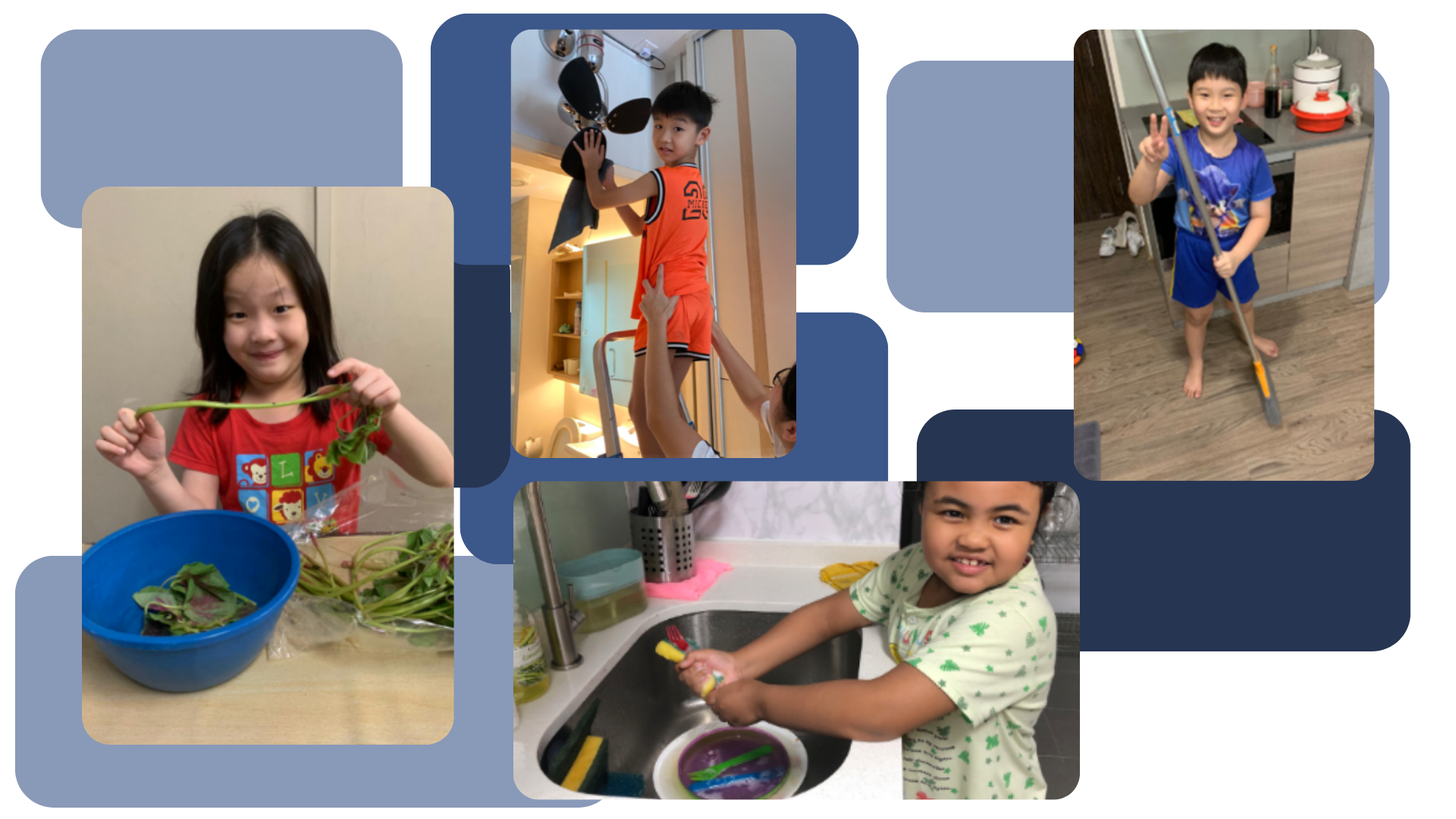
Students learn to take self-responsibility and to serve others – especially their elders, at home.
Primary 3 and 4 - School
Students learn to look out for opportunities to serve the school community by providing suggestions or helping out in the school improvement projects.
Appreciation Projects for Non-teaching (Admin) and Cleaning Staff.
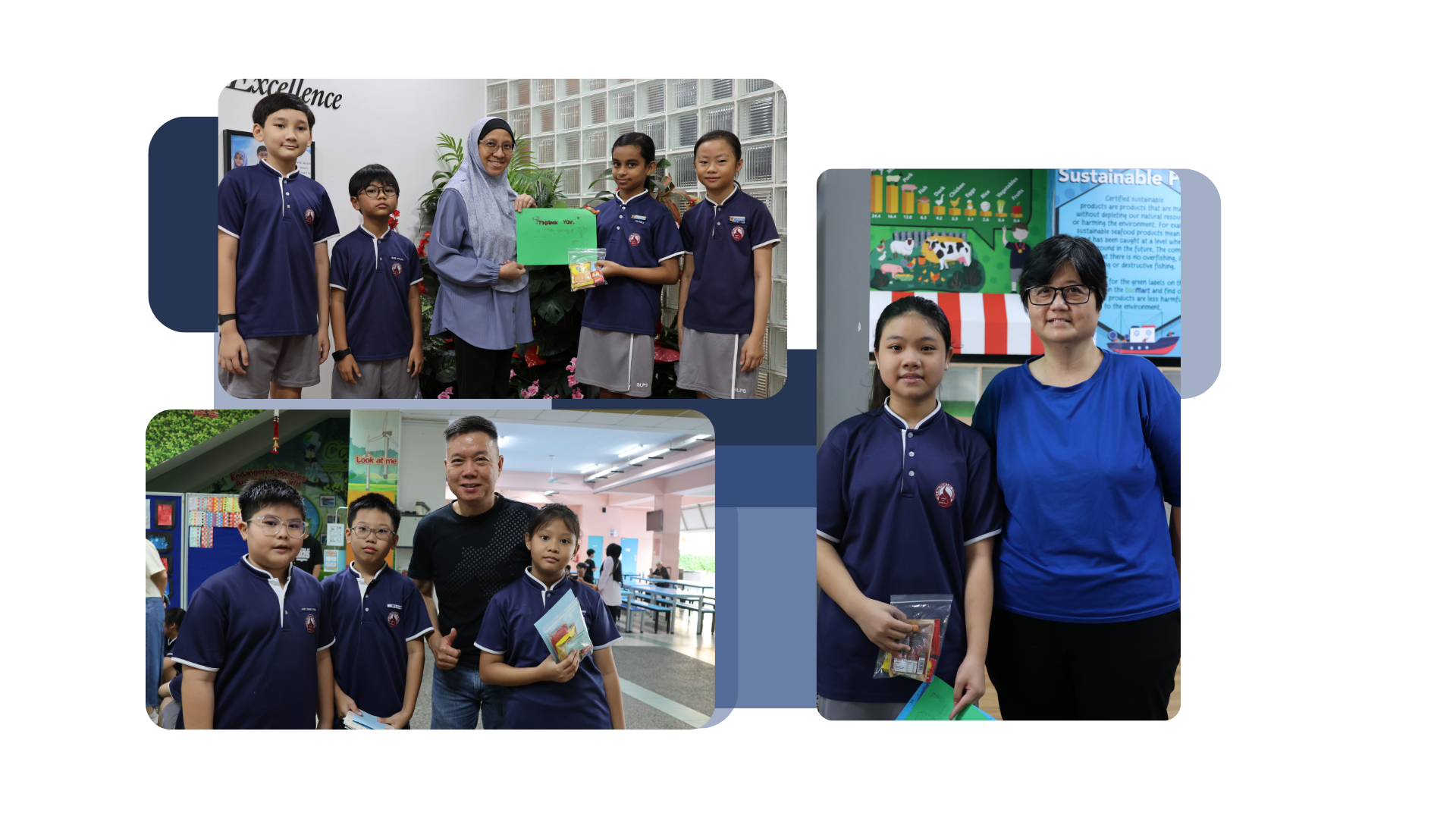
Students' Suggestions
Primary 5 and 6 – External Community
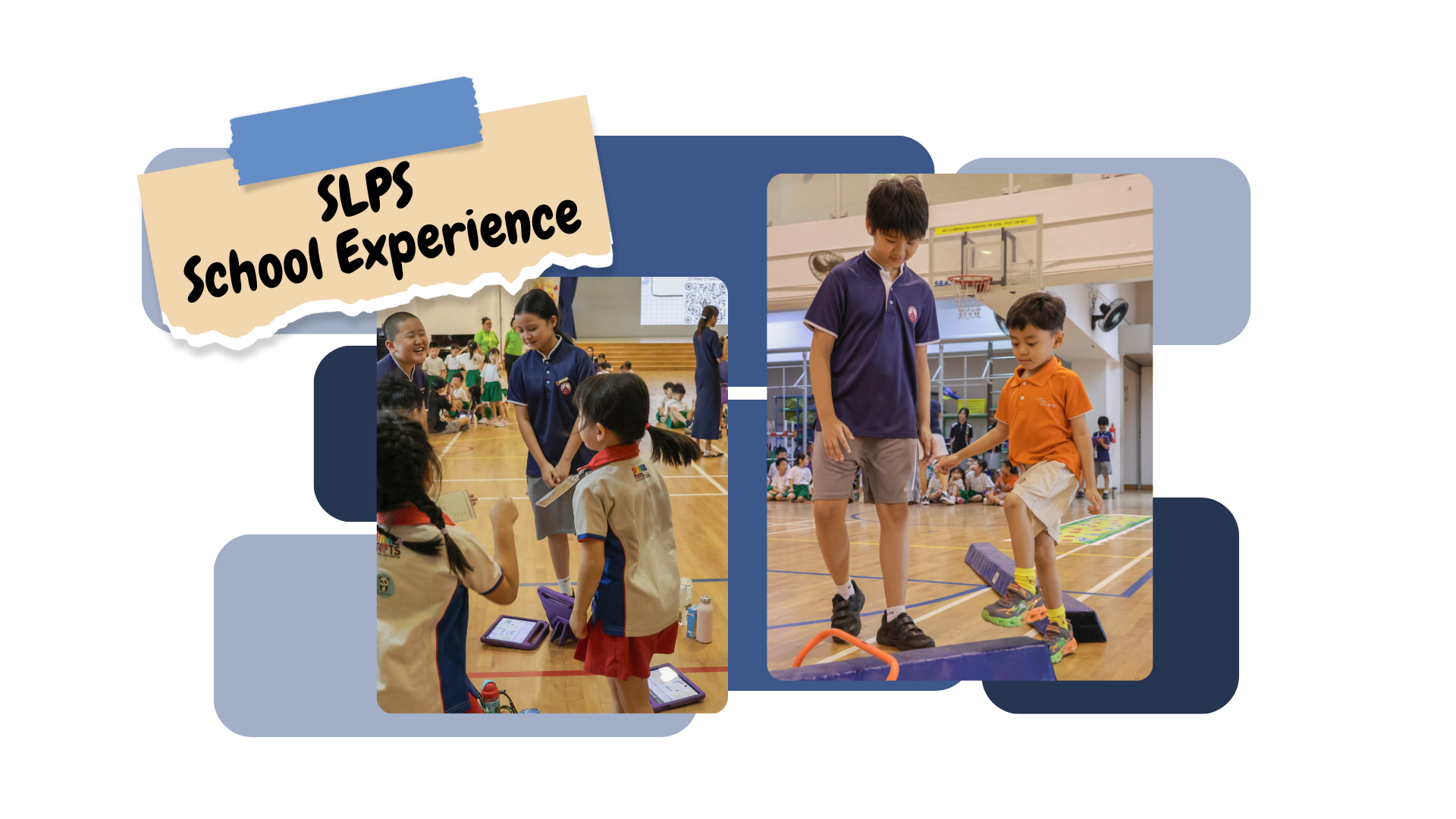
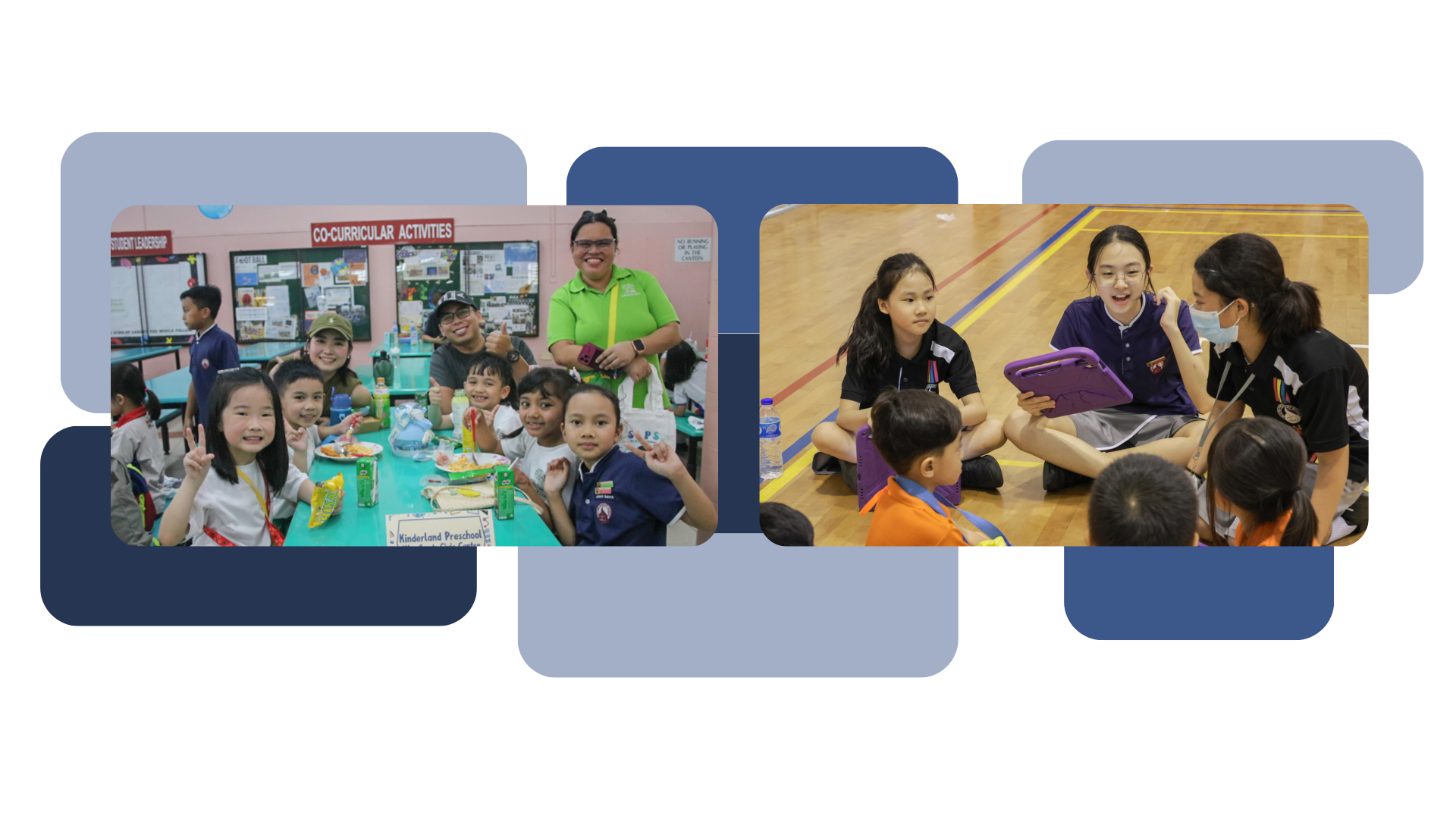
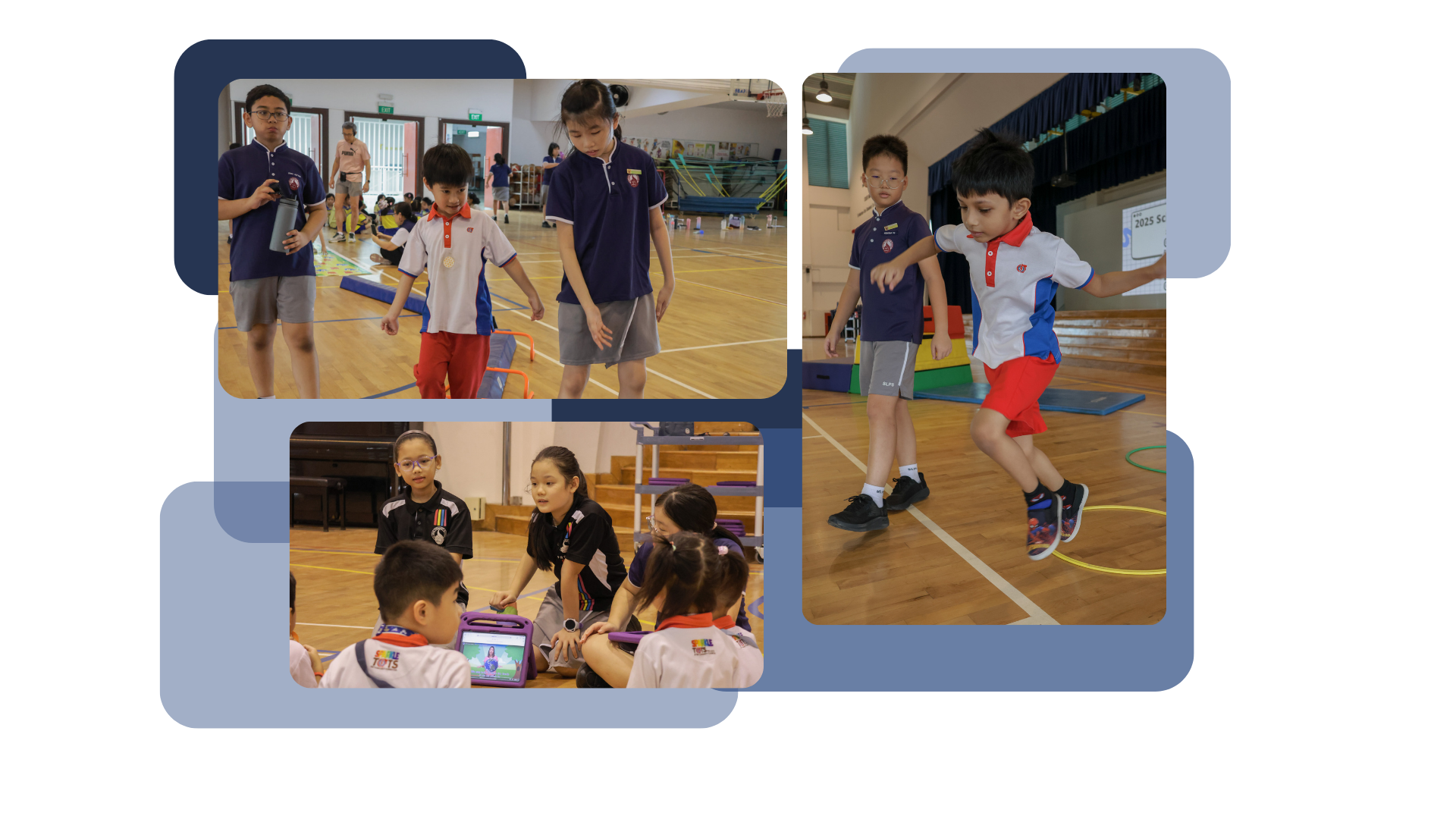
Students serve the external community by being a part of our school's outreach efforts like the kindergarten outreach programme where they teach or impart basic skill sets to kindergarteners.
Student Leadership
Si Ling Primary School adopts its Leadership Framework from Kouzes and Posner’s The Leadership Challenge. By understanding the five domains outlined in the framework, students at SLPS are guided to develop and demonstrate key leadership traits.
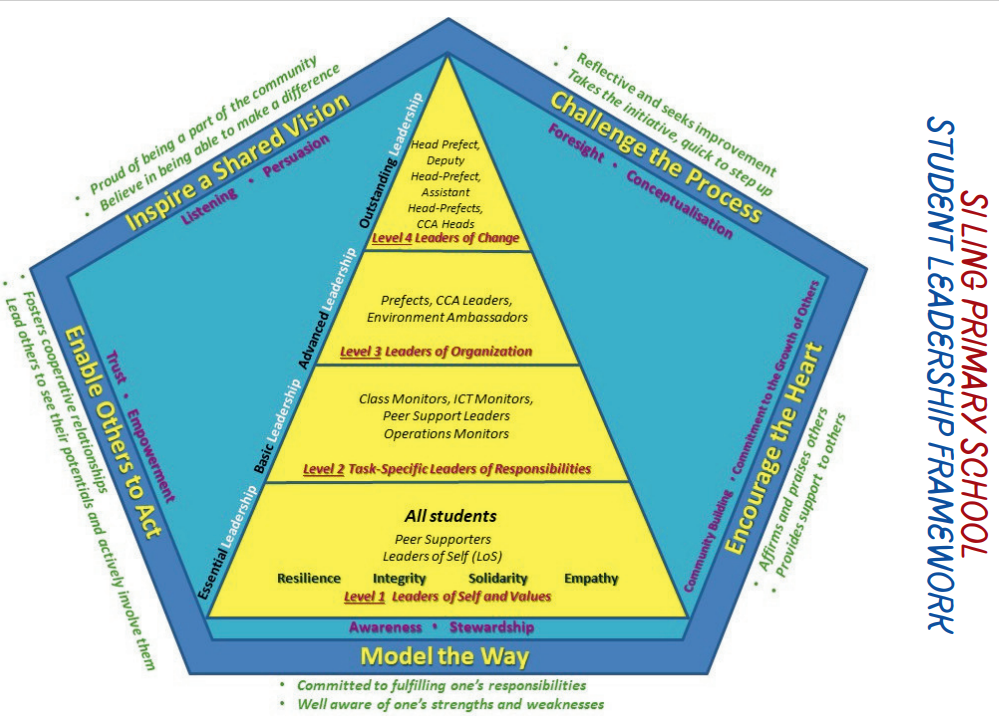
Student Leadership Framework
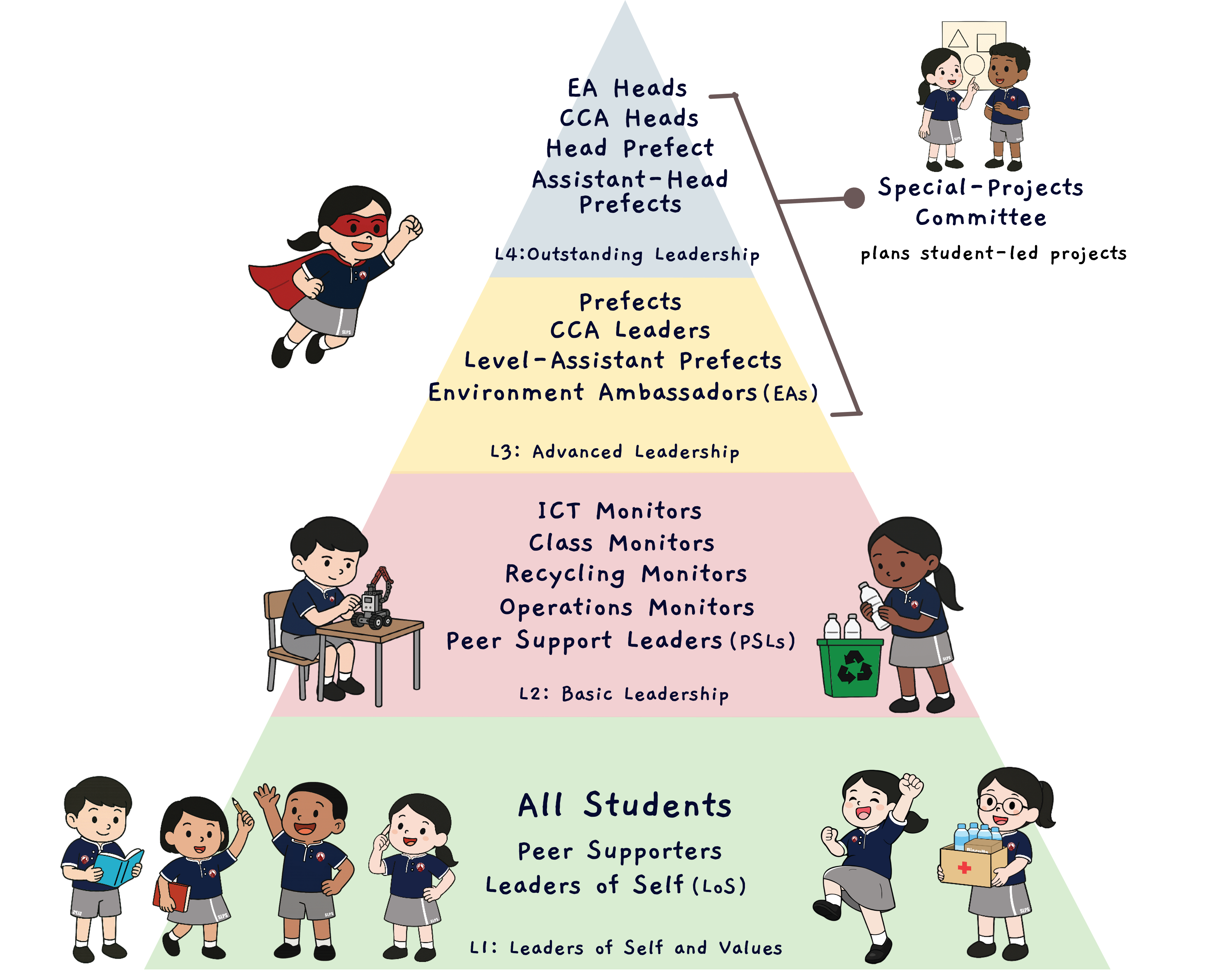
At Si Ling Primary School, we believe that every student is a leader. Our student leadership framework is designed to develop leadership progressively, allowing students to grow from leading themselves to leading others and contributing meaningfully to the school community.
Our leadership structure is organised into a tiered pyramid, ensuring that leadership development is inclusive, purposeful, and age-appropriate.
L1: Leaders of Self and Values
At the foundation of our framework are all students. At this level, students learn to:
Demonstrate responsibility, integrity, and respect
Practise self-discipline and positive learning behaviours
Support peers as Peer Supporters and Leaders of Self (LoS)
This stage focuses on building strong values and character, forming the basis of effective leadership.
L2: Basic Leadership
Students at this level take on functional leadership roles, such as:
ICT Monitors
Class Monitors
Recycling Monitors
Operations Monitors
Peer Support Leaders (PSLs)
These roles provide students with opportunities to develop basic leadership skills, teamwork, and accountability through daily responsibilities.
L3: Advanced Leadership
At the advanced level, student leaders take on broader responsibilities and influence, including:
Prefects
CCA Leaders
Level Assistant Prefects
Environment Ambassadors (EAs)
Students learn to lead by example, support school initiatives, and mentor younger peers while strengthening their communication and organisational skills.
L4: Outstanding Leadership
The highest tier recognises students who demonstrate exemplary leadership qualities and commitment. Roles include:
Head Prefect
Assistant Head Prefects
CCA Heads
Environment Ambassador (EA) Heads
These leaders work closely with teachers and school leaders, often serving on Special Projects Committees, where they plan and lead student-initiated projects that contribute to school improvement and community engagement.
Developing Leaders for Life
Through this structured and developmental approach, Si Ling Primary School nurtures confident, values-driven leaders who are prepared to serve, inspire others, and make a positive difference—both in school and beyond.
Key Programmes
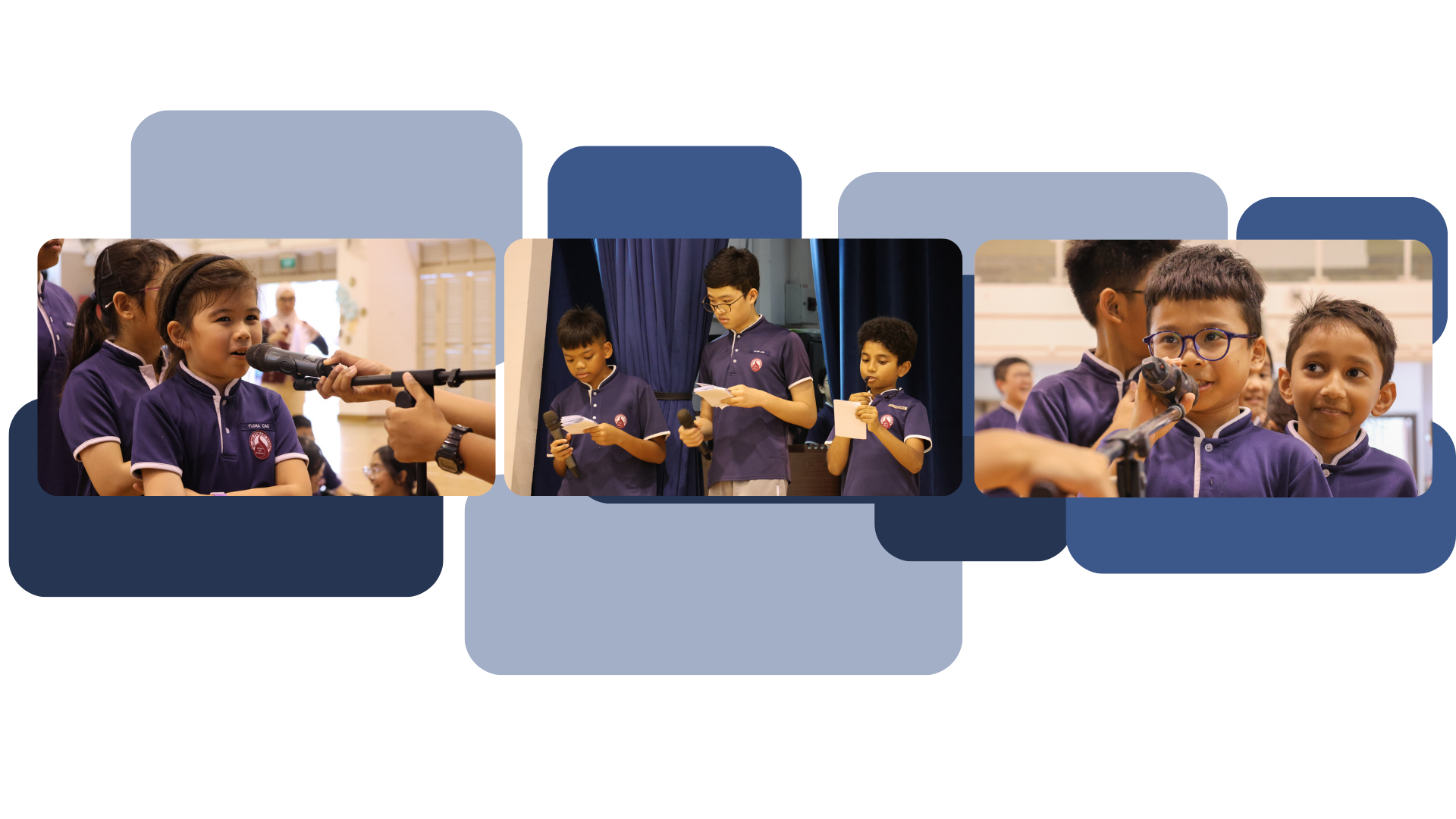
Students Voice Forum
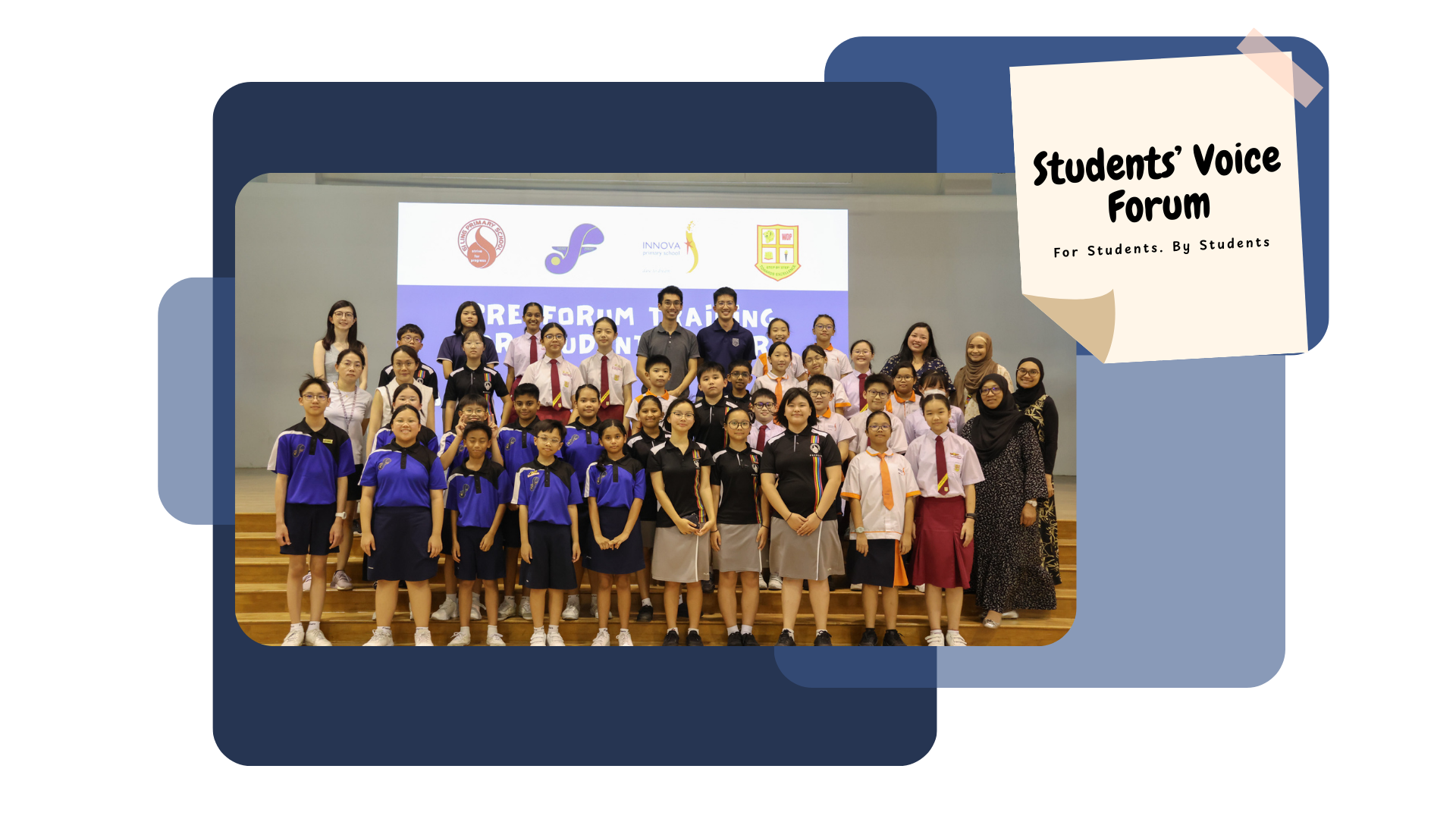
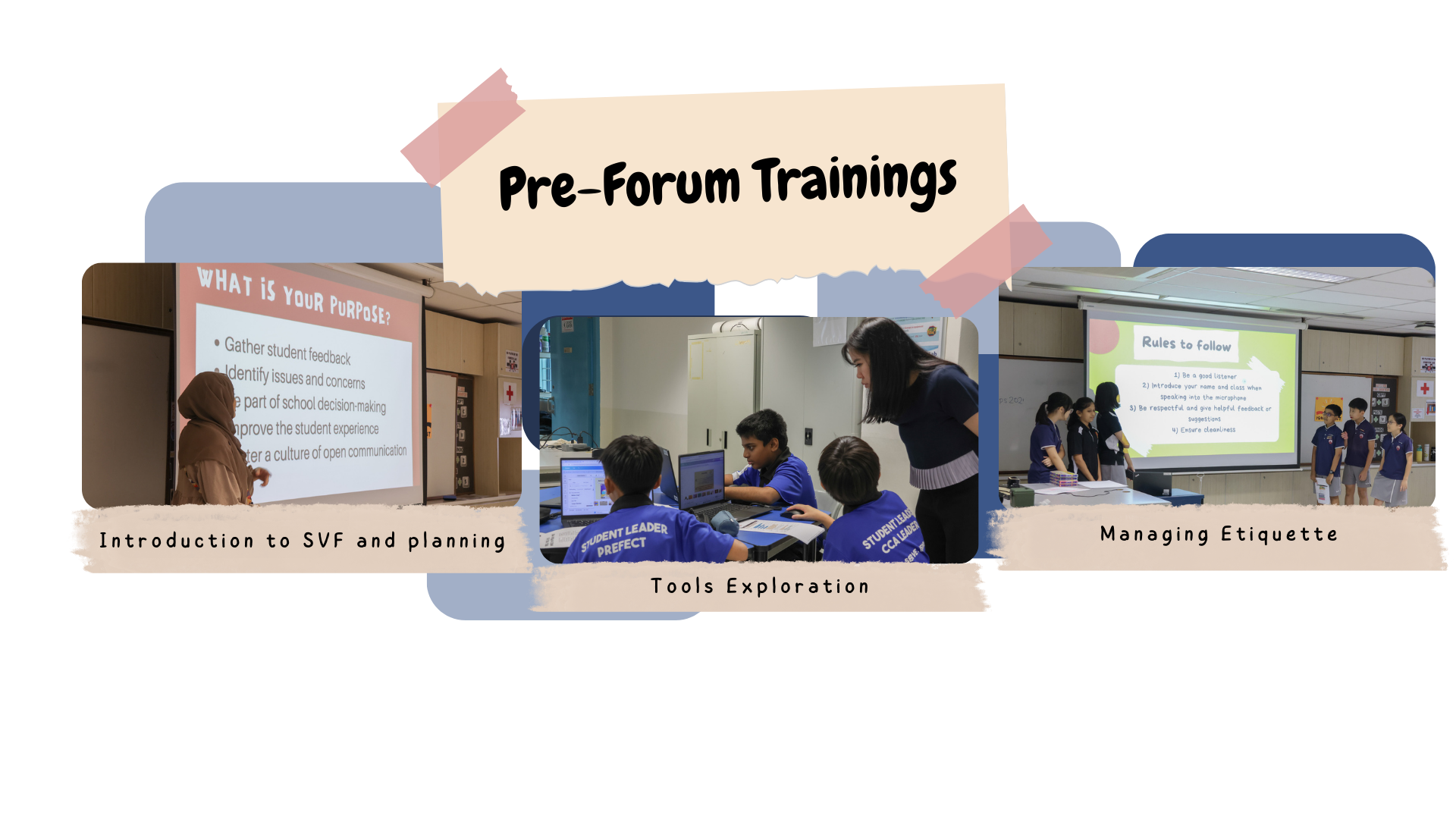
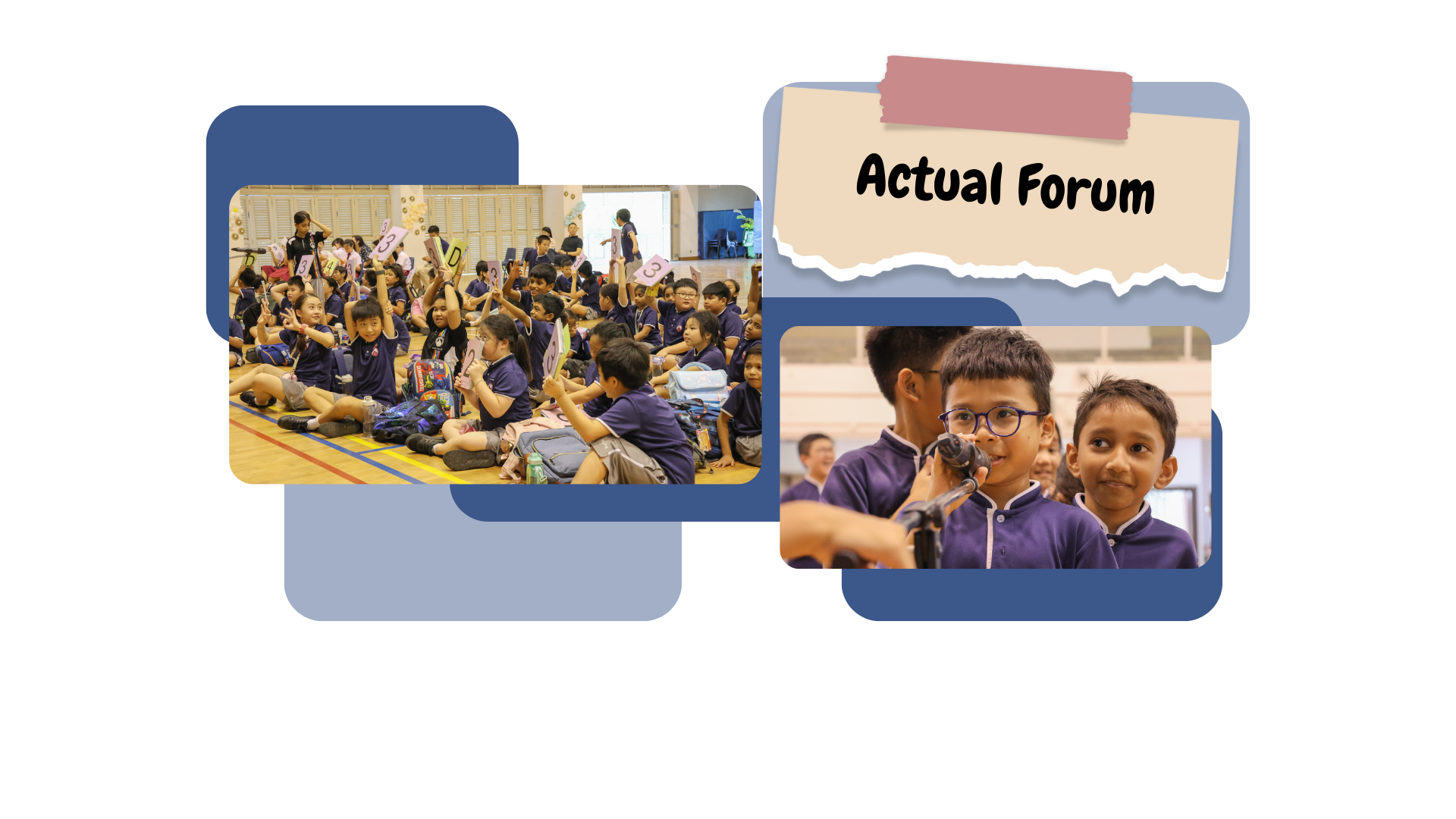
The Students’ Voice Forum aims to develop student leaders’ 21st Century Competencies (21CC) in communication, collaboration, and information skills, as well as civic and cross-cultural literacy. Through managing the entire process of engaging their peers on school improvement matters, student leaders learn to listen, reflect, and take action on issues that matter to their school community.
Each term, all students are invited to provide feedback and suggestions on various topics related to school life and improvement projects (e.g., use of lockers, creation of student spaces) via a student-leader-led online survey. This is followed by a townhall-style discussion forum, where students further deliberate on the ideas shared. The Student Leadership Committee, together with selected student leaders, then reviews the feedback and identifies feasible suggestions to be implemented in the following term.
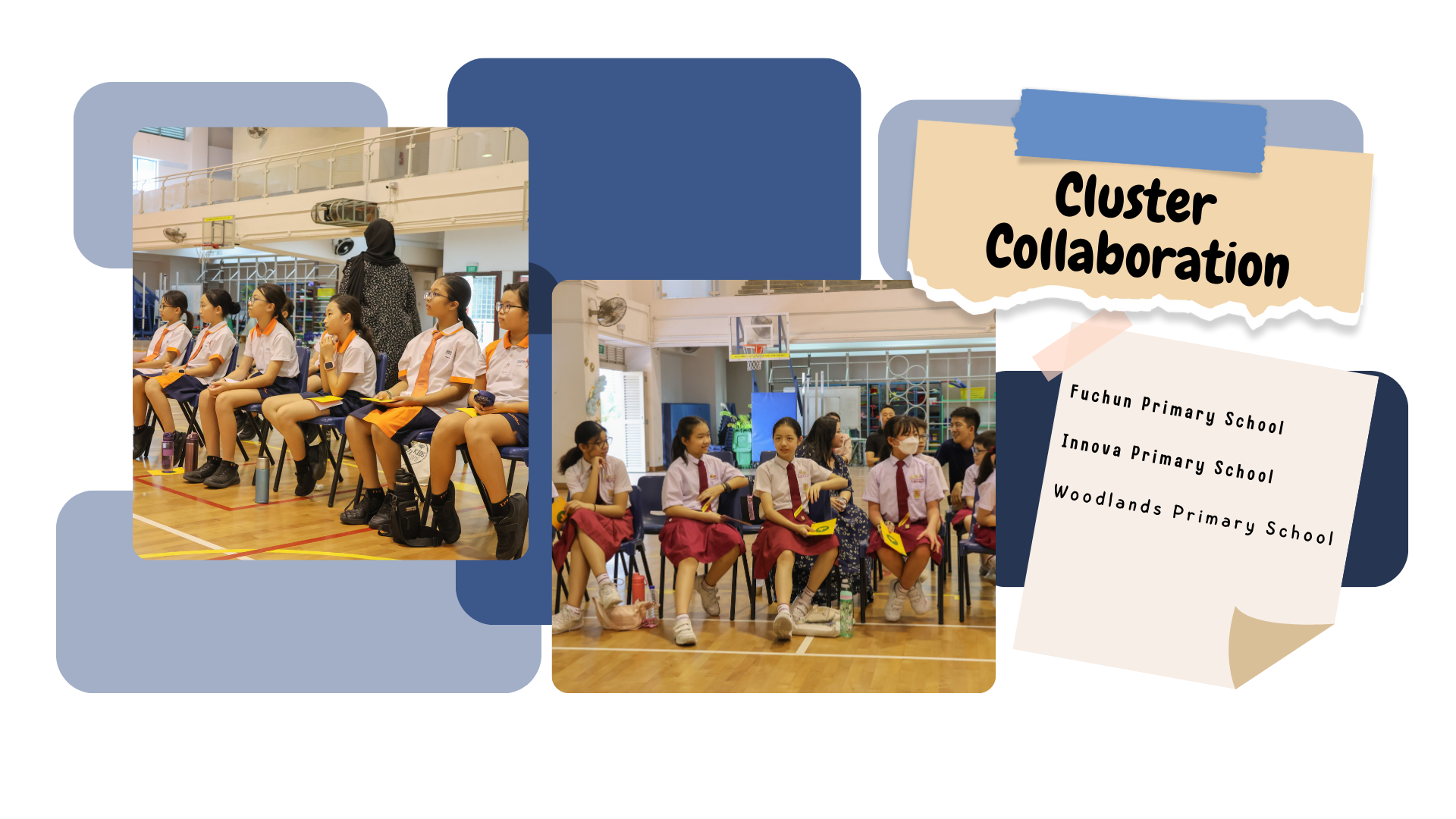
In May 2025, the school collaborated with cluster schools — Fuchun, Innova, and Woodlands Primary Schools — to showcase the implementation of the Students’ Voice initiative. This collaboration provided an opportunity for cluster schools to learn from SLPS’ experience in infusing 21CC in the LLP, and explore ways to adapt the initiative in their own contexts.
Kindergarten Outreach (Si Ling School Experience)
All Level 3 Student Leaders—including Prefects, CCA Leaders, and Environment Ambassadors (EAs)—were deployed over three days to welcome kindergarten students to Si Ling Primary School. Our student leaders took on multiple roles, such as leading icebreakers, facilitating PAL activities, and guiding kindergarteners through the sustainability lesson at EcoMart.
A selected group of student leaders also underwent additional training to serve as school guides for the campus tour. Positive feedback was received from the visiting kindergartens, participating parents, and our own student leaders. Through this programme, student leaders developed essential 21st-century competencies, particularly in collaboration and communication.