

Extensive Reading Programme
Programmes & Activities
Our Experiences
P4 Mother Tongue Activity Day
In Term 1, Malay Language students had the opportunity to experience different aspects of Malay culture.
(i) Traditional Malay games (congkak, gasing, lereng, and sepak raga). Besides working up a sweat, the students learned about important values such as resilience and teamwork.
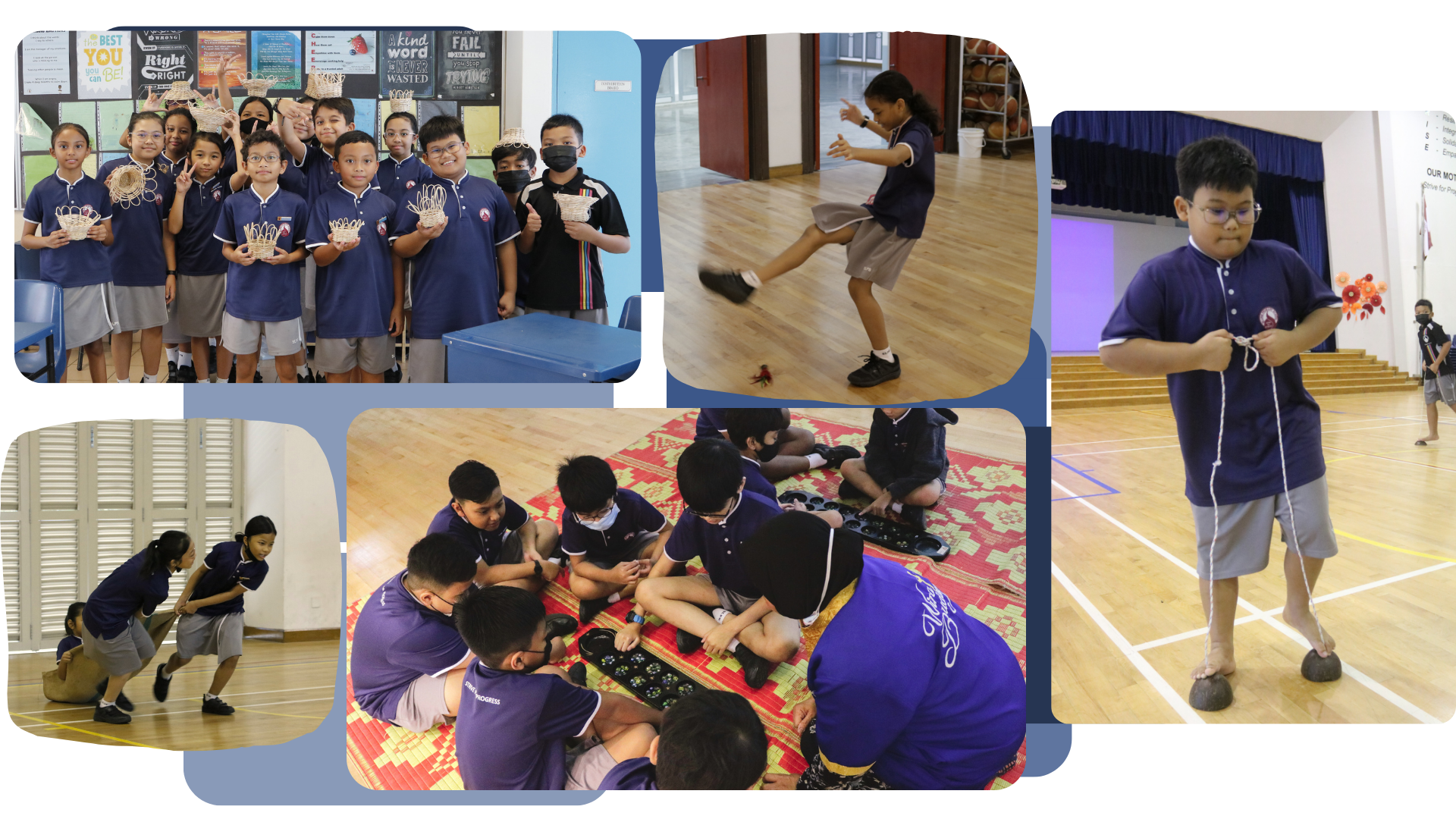
(ii) The kompang, a traditional Malay musical instrument. In this activity, the students learned the correct techniques for playing the kompang, as well as values such as solidarity and patience.
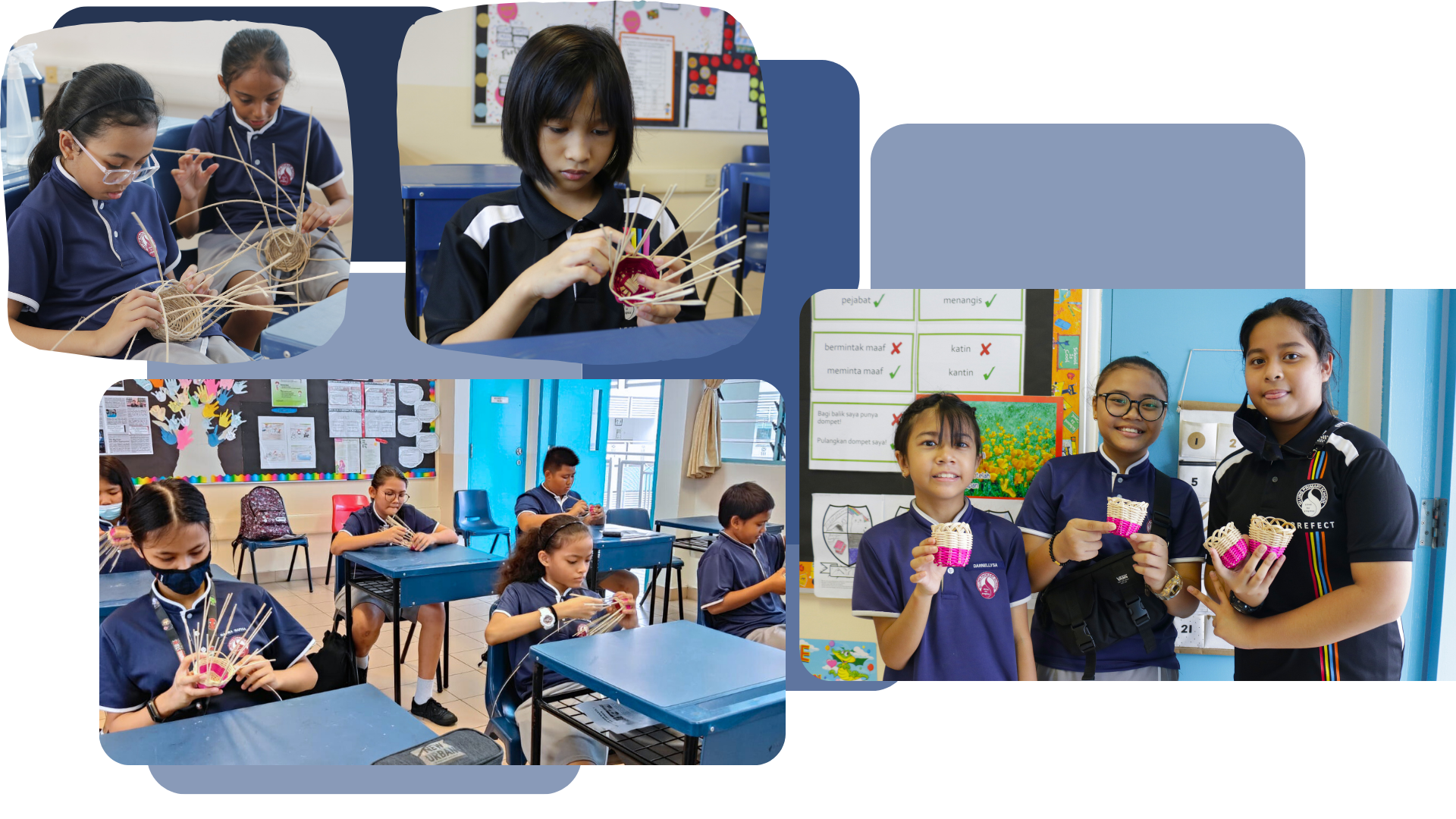
(iii) Mini basket weaving, a traditional Malay craft-making activity. The students even brought their crafts home! Those who managed to complete their baskets early helped their other friends. This activity also taught them patience and resilience.
MT Fortnight
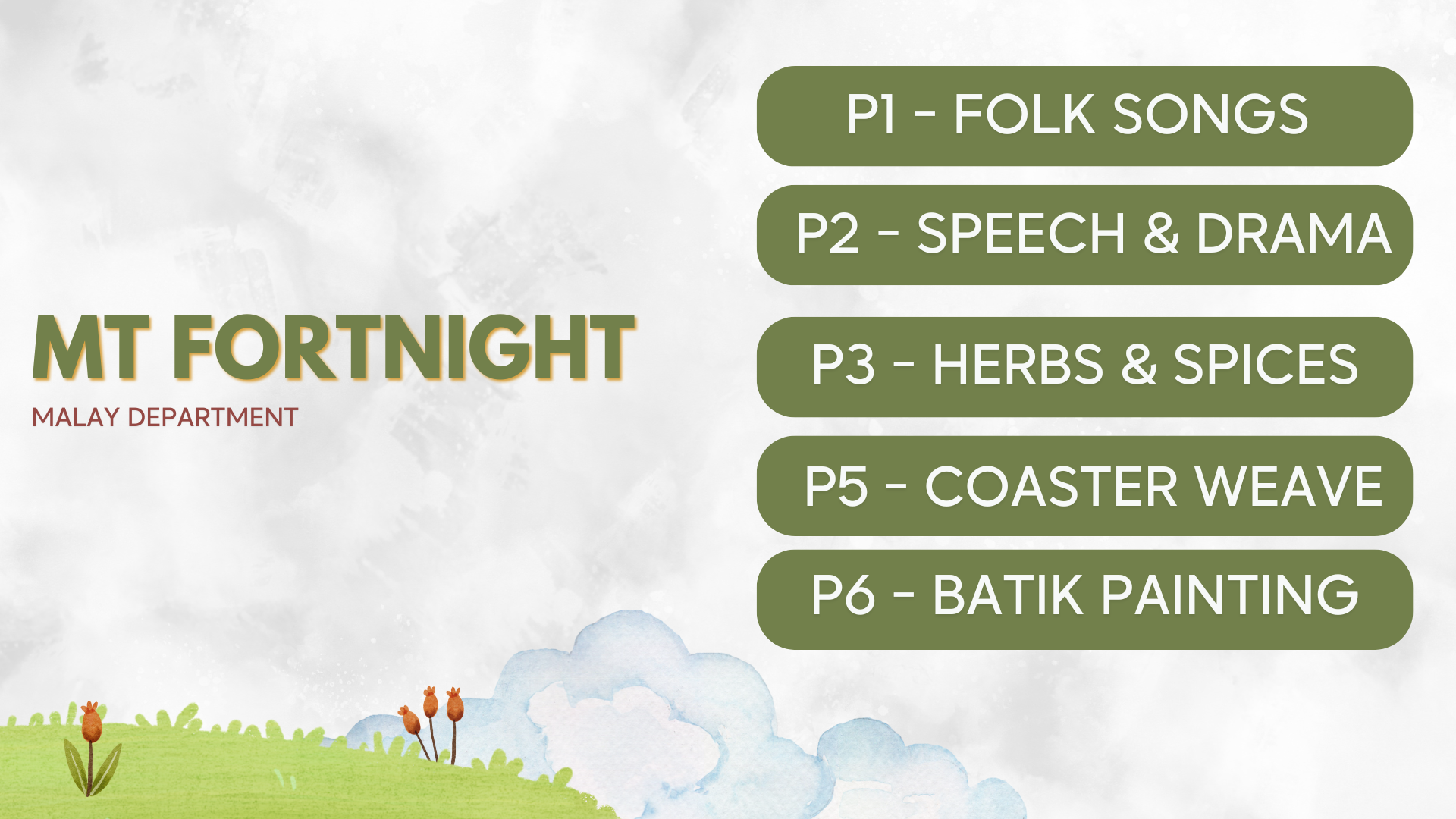
Over the first 2 weeks of Term 2, ML students will be participating in various ML cultural activities. Do check out this space for more updates soon.
Malay Language Lessons Incorporating ICT
The objective of such lessons is for students to learn in a safe ICT environment while acquiring language skills and authentic ICT values.
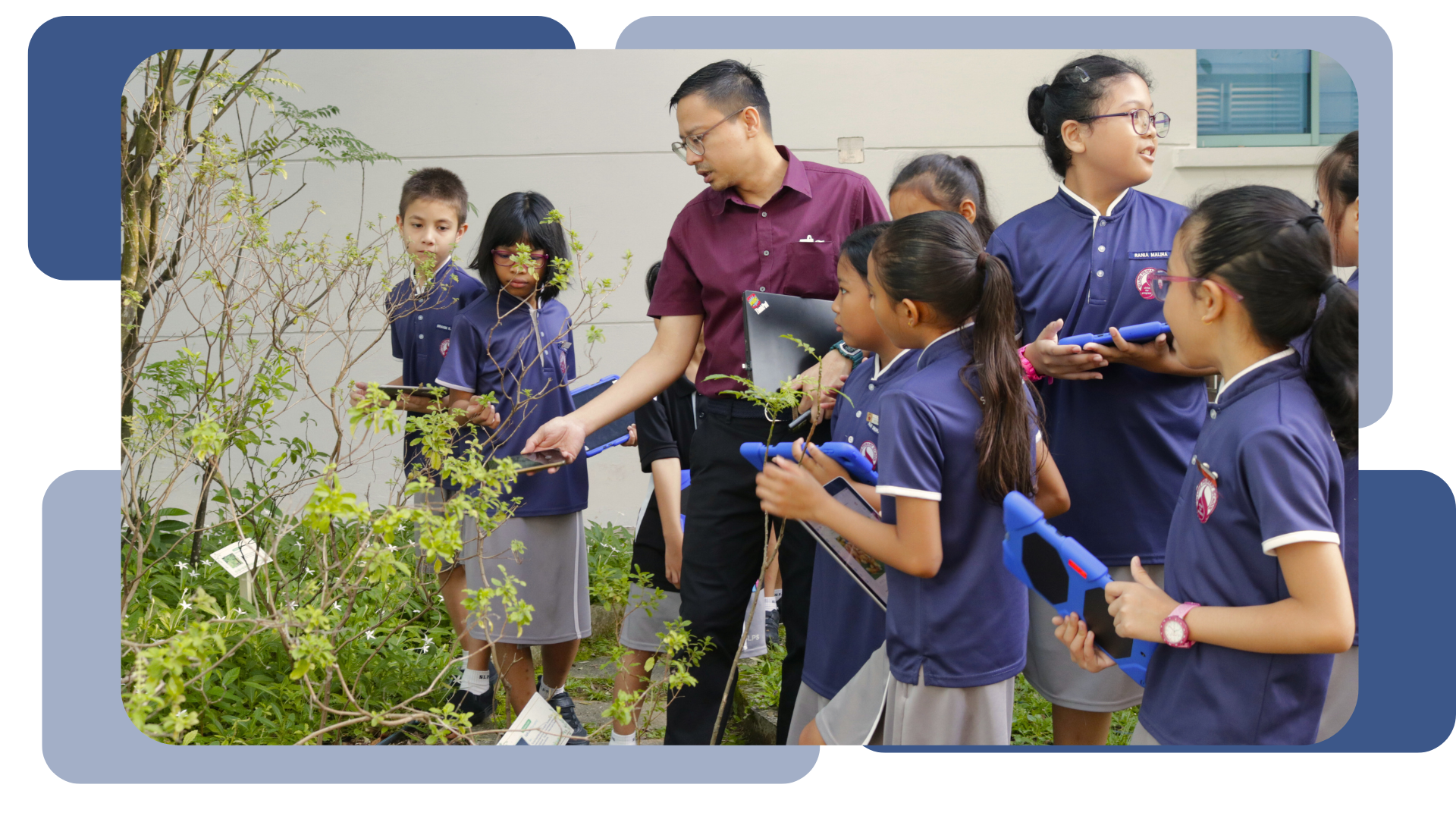
In our school, we expose students to suitable ICT tools such as SLS, Kahoot, Socrative, and many others. We believe these ICT tools will provide engaging learning experiences for our students. We have planned several Malay Language lessons that incorporate ICT. Apart from learning in a fun ICT environment, students will also learn positive ICT values (cyber wellness) together with their peers.
Writing Package (Primary 3–6)
Objectives of this package:
(i) Students are able to identify the parts and elements of a composition
(ii) Students are able to develop the content of a composition
(iii) Students are able to organise ideas according to a given topic or picture
We hope that the teaching of composition writing will be more structured with the introduction of this writing package. We teach the essential components that must be included in a composition. Both language use and content will be emphasised. Sample compositions will also be shown to students so that they are better guided when producing their own compositions.
In terms of differentiated instruction, the focus varies according to levels. We will place emphasis on words and phrases for lower primary students (Primary 1–2). For middle primary students (Primary 3–4), the focus is on constructing correct sentences and paragraphs. Finally, full composition writing that encompasses various aspects of language and content will be the focus for upper primary students (Primary 5–6).**
Extensive Reading Programme
Objectives of this programmei:
(i) To cultivate students’ interest in and habit of reading,
(ii) To expand students’ vocabulary
(iii) To improve students’ level of language proficiency
We strongly encourage students to read. Academic experts have shared extensively about the benefits of reading. Therefore, we hope parents can encourage their children to borrow Malay storybooks either from the school library or the national library.
We believe that students who read diligently will be able to expand their vocabulary. This, in turn, will help them produce good compositions and communicate more confidently in the Malay language.
After reading, students are encouraged to fill in a reading log with details of the books they have read. We also encourage students to share interesting books or reading materials with their friends.
We provide post-reading activities that are appropriate to the students’ age levels. These activities include drawing their favourite characters or describing their favourite scenes from the books they have read. We also encourage Primary 4–6 students to write book reviews.